Aseres Hadibros Aliya

There is a saying, “whatever goes around comes around”. For better or for worse, life eventually catches up with everyone. Sometimes it happens sooner and sometimes it happens later, but eventually Hashem serves everyone the same portion they served others. For the most part, life has a way of keeping track and we experience it according to our prior actions. By Hashem, no good deed goes unrewarded and no bad deed is unaccounted for. Simply put, Hashem runs His world מדה כנגד מדה.

It became my custom after the passing of my father, to try and acquire מפטיר & מוסף on the Yom Tov day יזכור was recited, as a zechus.

One year, right before it was time to be called up for מפטיר, the Gabbi approached me and said, “I know you bought מפטיר and it belongs to you, but there is a guest in Shul, an old Jew, who very much wants מפטיר. Would you forfeit the Aliyah?” That was not an easy decision to make.The only reason I bought מפטיר in the first place, was to honor the memory of my father. What right did I now have to give it up. Wouldn’t that be a dishonor? So I went over to the Rov and asked him what to do. He thought for a moment and said, “if you give up the מפטיר, the joy you will bring this old Jew will be so significant, that the merit your father will receive from your act of חסד, will be greater than if you took the מפטיר for yourself.” I humbled myself, accepted the Rov’s decision and forfeited the Aliyah. As hard as it was, it was even harder to pay for the מפטיר I never received.
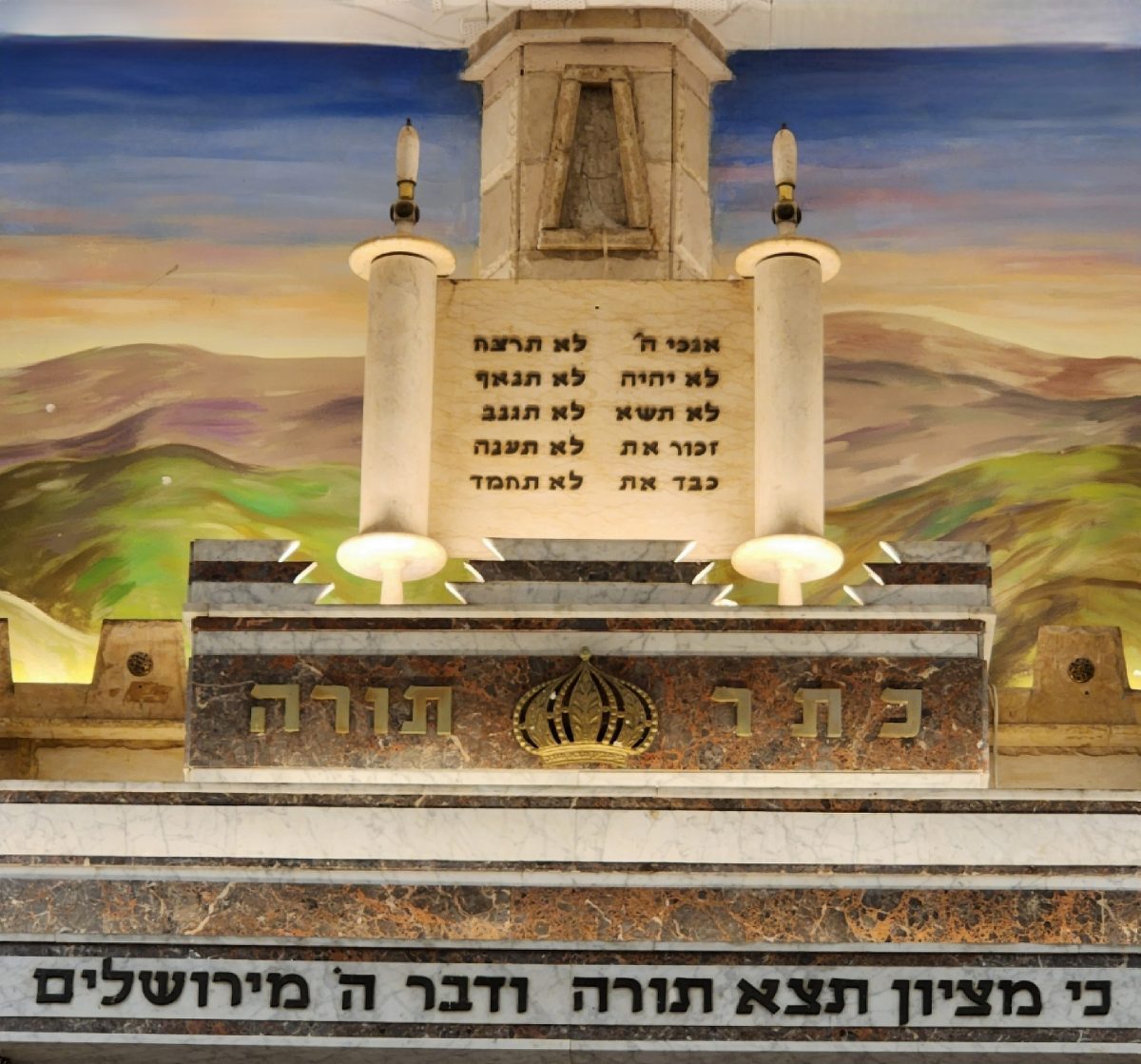
Now turn the clock ahead 35 years. The Yom Tov of Shovuos had arrived. A small Minyin gathered in one of the Enclave  homes in Lakewood where I resided at the time. As is customary right before Kereyas HaTorah, the Gabbi sells the Ahleyos. I decided to buy Aseres Hadibros and joined the bidding process. Out of the corner of my eye I noticed, that there was only one more person bidding against me, which happened to be a good friend of mine. Was very uncomfortable, trying to outbid him, so I just backed off and let him win the Aliyah. What I did, did not go unnoticed. When the time came for the Aseres Hadibros to be read, my friend forfeited the Aliyah he bought and told the Gabbi to give it to me. He noticed that I really wanted the Aliyah and that I backed down only because I didnt want to interfere with his will to buy it. What a true friendship. I didn’t want to take it away from him and he didn’t want to take it away from me. No doubt after the Aliyah I asked the Gabbi to make a מי שברך accompanied by a contribution in his honor.
The מפטיר I paid for and gave up 35 years earlier now came back to me, with my friend giving up his Aliyah that he paid for and giving it to me. We have a dictom אין הקב”ה מקפח שכר כל בריא. Hashem keeps track and rewards everyone justly, at the right time. Sometimes it takes time, a lot of time, before Hashem pays a Jew back for a positive action he did, but nothing is ever forgotten. When you see it play itself out, it is a humbling experience. You never lose, when you do the right thing. It always comes back to you or to your children, in one way or another. The main thing is to try to do the next right thing, no matter what anyone else is or is not doing. We worship Hashem, no one else and nothing else.


LOOKING FOR A ZECHUS

Looking for a ZECHUS was my father’s essence. Again and again, no matter what happened, he was always looking for a ZECHUS.
He embodied and lived the lesson Chazal taught us, “תן בלבנו, שנראה, מעלות חברנו  ולא חסרונן”
“Hashem, have our hearts perceive, the merits of our friends and not their failures”.
In the home I grew up, it was common place for my mother to always say, “Daddy is already looking for a Zechus”. Whenever a situation arose, where someone could possibly be blamed, my father would immediately figure out some kind of reason, how to justify a behavior and how to excuse the person supposedly at fault. Then he said in Yiddish, “פארקיק מאן קינד, פארקיק”
 “Overlook my child, overlook” There are two ways to view every incident, either positively or negatively. It is our choice to pardon, or condemn. To forgive or carry a grudge. To aggravate a situation, or calm it down, by overlooking. We need to ask ourselves, what lifetime goal,  we wish to pursue. Do we want to enhance peace, or increase strife, whenever challenged? It is interesting to note, that much of what we experience
in life relationships, is dependent on our perception and reaction. We need to truthfully ask ourselves, why we find it so difficult sometimes to give someone else, the benefit of the doubt? Is it about our pride? Let’s be real. If we were more humble, would we pay much attention to every infraction we are faced with?
At the end of the day, our stature in life is not raised by putting others down. On the contrary, it is only by building others up and finding a ZECHUS for them, that we merit Hashem’s blessings. We only build a happy cohesive family and society through kindness, forgiveness and understanding. When we emulate Hashem’s ways and search for a ZECHUS, for the people around us, then when we mess up, Hashem also gives us the benifit of the doubt. Our main goal must always be to create peace and harmony, at home, in Shul and in all our other relationships. Want a Zechus, find a Zechus.

My Prayers Can’t Go Up

This unforgettable experience is cause for reflection. At least it was for me. So I called up  Rabbi Pesach Krohn and shared the following story with him. He was inspired and told me he would incorporate it into one of his lectures on Tefillah.
One morning, I happened to wind up davening Shacris in one of the large prominent Shuls in Brooklyn. Unfortunately it looked more like a marketplace then a Shul, begging for מורא מקדש. Found it difficult to concentrate, let alone hear the Chazan.
A loud commotion suddenly arose from the center of the Shul. An elderly man had gotten up from his seat and started screaming loudly, “quiet, quiet, quiet. My wife is in the hospital dying and your commotion and disrespect, is not allowing my Tefillos to go up to Hashem. I will hold you all responsible for anything that happens to her”.
Everyone stopped cold in their tracks and were taken aback by his heart wrenching words. That unexpected outburst quieted things down and allowed davening to resume. Rest assured, things were not the same after that.
Personally, I was gratified to have witnessed a real Jew in action. Not intimidated and afraid of no one, but Hashem. In the depths of his heart, he truly felt, that his prayers to Hashem, had the power to make a difference. He was so connected to Hashem and convinced, that his wife’s recovery actually depended on his prayers. He hadn’t come to Shul that morning just to daven, pay his respects, mumble some words, speak to some friends and take off. He was earnest and sincere about in who’s presence he stood and felt violated by those who were treating his Shul disrespectfuly, like a club house.
Wouldn’t it be nice if we always thought that way? Do we believe, that every prayer we say is precious and heard? Do we sincerely feel our prayers have the power to create change? That our prayers go up and are accepted, when presented properly, with sincere intent. That they must be said in a respectful way, in a respectful place. After all, we are speaking to the King, directly, with no intermediary. What an honor, to have this opportunity bestowed upon us. Do we appreciate it? Then how can we tolerate noise and disturbance, while having a one on one conversation, with the One and only. The only One that has the real power to make a difference in our lives, the lives of our family and in the lives of all those we are praying with.
How lucky to have been there that particular morning and to have the opportunity to be taught this important lesson. You want Hashem to pay attention to you, you best pay attention to Him. When you are aware of Hashem’s presence while in His Presence, then does Hashem take notice of you to. That morning will always be etched in my memory. Whenever I am in Shul, amongst people who forgot why they came to Shul in the first place, I hear that old Jew screaming, “quiet, quiet, quiet”.

ONE FOR ANOTHER

We are commanded in the Torah, “Love your friend like yourself”. How can a person love someone else like themselves? A tall order indeed, but obviously possible.

A prerequisite to loving your friend as yourself, is to first love yourself. You can’t share that which you don’t have. When a Jew is at peace with himself, through the Faith and Trust he has in Hashem, he can more readily share the tranquility and happiness, that comes from such living with another person. He has no issues, complains little, carries no grudges and pardons his grievances. No one is giving him. No one is taking from him. Whatever happens is per Hashem’s will.

Judging people favorably is a good starting point, in practicing true love for another person. After all, they are only human beings, just like us. Who doesn’t want to be judged favorably? Who doesn’t want to be given the benefit of the doubt?

My father of blessed memory, HoRav Pinchos Singer z”l was such a Jew. He loved and cared about people and always showed it. Giving someone the benefit of the doubt or finding merit in their actions, was second nature.
During the second World War, he ran around collecting large sums of money for Vaad Hatzolah, to save Jews trapped in Nazi territory.
After the war years, he traveled all across the USA and Canada, delivering inspirational speeches. He encouraged Jews to respect Torah learning, thereby motivating them to support the financially struggling Yeshiva Chofetz Chaim.

Throughout his life, he would always try to benefit Jews,  wherever he was and whenever possible. It was second nature, part of his essence.

I remember one day walking with him on 13th Avenue, in Boro Park. All of a sudden he started running towards a parking meter that had a red expired sign. He had noticed an officer getting ready to issue a parking ticket. Quickly he put a dime into the meter, before the officer could start writing the ticket. Didn’t understand why he did that, since it wasn’t his car that was being ticketed. So I asked for an explanation. He simply replied, “the car probably belongs to a Yid. Most people living in Boro Park are Jewish. I didn’t want a Yid to get a ticket”.
He was always thinking about how he could help someone else. Its one thing to say I love you. It’s an entirely different thing to show it and do something about it. True love is when we can imagine ourselves being in the other persons predicament and then doing something to alleviate their hardship.
We are taught that if you see your friend’s animal sagging under a load, you are required to lend a hand and help out. Then how much more so, do we need to lend a hand to help out a fellow Jew in trouble.
One of the greatest acheivments one can accomplish in this world, is to help another Jew. When we do that, we are helping one of Hashem’s children. Hashem is deeply in love with the people that help his children out.
Since we are all children of Hashem, we are bound together as brothers and sisters, responsible for each other. If we don’t look after one another and care for each other, who else will? Only through our deep concern and caring, have we been able to navigate the exile and survive. We only have Hashem and each other. Love your fellow man like yourself, to nurture peace and harmony within your family, your community, and your world. Hashem will surely smile down upon you and shower you with His endless gifts.

REAL SEARCHING

We are all familiar with the Mitzvah of Bedekas Chometz. Every Jewish household in the world, on the night preceding the 14th day of Nissan, searches their properties to insure that all Chometz was removed and nothing was overlooked during the cleaning  preparations. It is customary for a member of the household to hide ten pieces of bread in different areas of the house, to insure that the blessing is not recited in vain and that a thorough final search is conducted. Problem is, when night time arrives, most people are exhausted from all the preparations. They might only search procedurally, relying on the cleaning they did days before.

Over the years life has taught me, that it is really important to do a thorough search despite the exhaustion.
Three incidents stand out in my mind, that keep reminding me,  to always go the extra mile, while performing this Mitzvah.
   Was once inspecting my car,  although it had already been cleaned. By chance I happened to find a peice of bread by the hood of the car. Couldn’t believe my eyes. How it got there, is anyone’s guess. Could have been dropped by a bird in flight or hidden by a squirrel. Who knows? What I do know is, that had the extra effort not been made to check the car again, the Chometz would not have found it.
   The sink section outside the bathroom is not a place where Chometz is brought. To crouch down and search under the sink, when it was already swept and mopped made little sense. Certainly there wouldn’t be any Chometz there I thought. But then I remembered what our Holy Sages taught, to search everywhere, even in the cracks and crevices. So with difficulty
I bent down and looked under the sink. How surprised I was to find some macaroni, that somehow found its way there.
   Another time, I was inspecting the dining room which had already been cleaned and set. By mistake I banged into the buffet table and caused one of the framed pictures standing on it, to tip over. Couldn’t believe my eyes, when a small whiskey bottle suddenly appeared out of nowhere. How did it get there? Then I remembered, it was put there as a temporarily prop, to support the framed picture that tipped over now.
How wise our Holy Sages were, to instruct us to do a final search, even after everything was cleaned.
Checking for Chometz can easily become a ritual practice, that we are over and done with quickly. The stories illustrate however, the benefit derived from exerting oneself to perform Hashem’s Mitzvah. In return Hashem gives us a measure of extra assistance.
To take this Mitzvah to a higher level, we might also want to consider inspecting ourselves during this process. Did we leave any Spiritual Chometz  behind like, anger, hatred, greed, lust, jealousy. These character defects are also Chometz, which we are required to  remove from our consciousness. Taking a casual inventory won’t suffice. It requires a thorough checkup, to insure that none of this bacteria resides within us.
Our Sages teach that even a tiny bit of Chometz is forbidden. Therefore it is incumbent upon us to make the extra effort to inspect ALL our possessions, inwardly and outwardly
Many of our Holy Sages felt that removing character defects from our being, should be the chief focus and main purpose of our visit to this planet. Maintaining a clean slate in our relationship with Hashem and also with our fellow man. Can never take for granted, that all is in order, unless we are constantly doing a truthful thorough search. Not easy, but somewhat attainable with consistent and persistent sincerity. Bedekas Chometz all year round, especially in the months of Nissan and Elul.

Mezzuzoh Connection

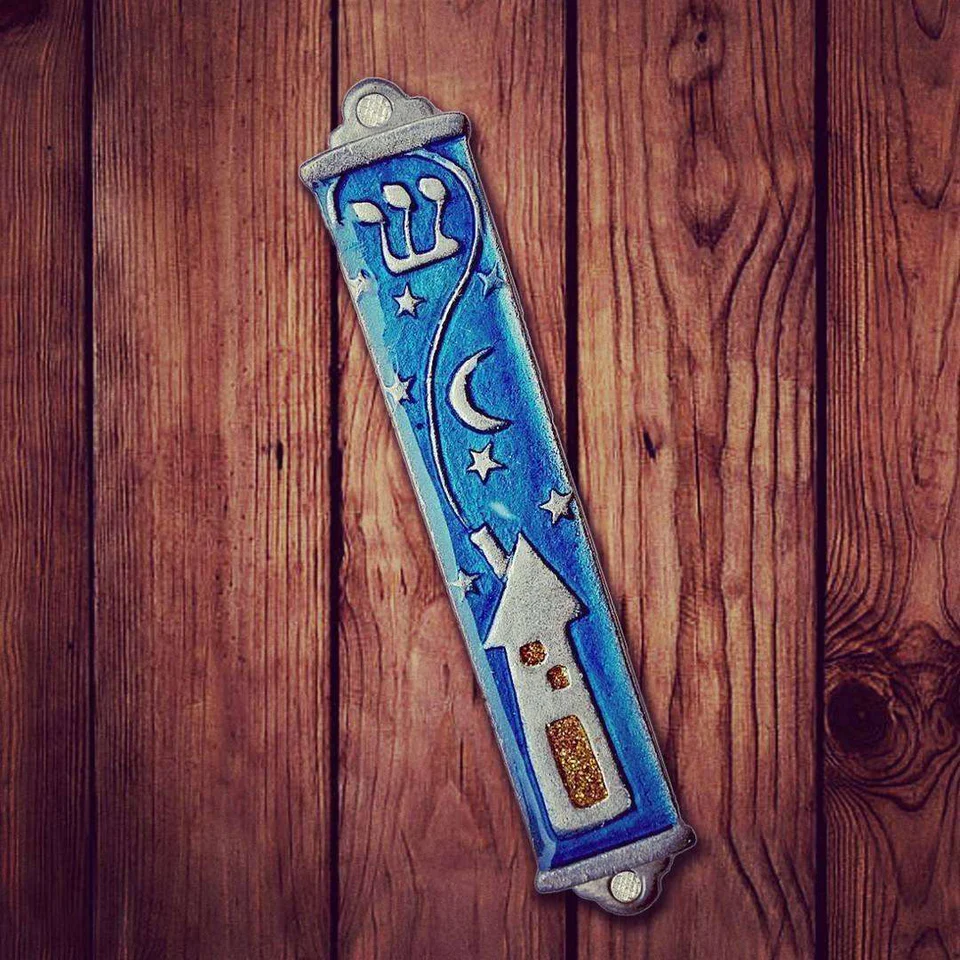
The Mezzuzoh is a permanent fixture, on every Jewish doorpost, of every room, in every home. Besides serving as a protective force, it reminds us, that the room we dwell in, needs to be treated as a Holy place. That Hashem’s Presence is there and that He is watching over us.

Our custom is to kiss the Mezzuzoh. Sometimes we remember and show our love and appreciation for the Mitzvah and sometimes we forget. No matter, the Mezzuzoh is always around, guarding our way, in and out.

On many occasions I had the special opportunity to find myself in the company of my esteemed Rebbe, HoRav HaGoan Chaim Pinchos Scheinberg ZT”L. Whenever he stayed in my home and wherever we traveled, I always marveled, how upon entering a dwelling, he would first stop at the Mezzuzoh, look at it, absorb it’s meaning, kiss it and only then walk in. You could see, how significant the Mitzvah was to him, just by observing his entry. Honoring and observing the Mitzvah meant much more then just mounting it and forgetting about it. It was not just some symbolic decoration adorning a Jewish doorpost. It deserved more then just a casual wave. To him, Mitzvas Mezzuzoh was a constant service, an opportunity to connect to Hashem. Seeing the Mezzuzah, motivated him to express gratitude to Hashem, for arriving safely at his destination. A spiritual connection took place between him and Hashem, at every departure and arrival.
The words we recite in ויתן לך, after Shabbos is over,  “ברוך אתה בבואך וברוך אתה   בצאתך”. blessed are you when you arrive and blessed are you when you leave, meanth something. It was not just words to be taken for granted.
Oh, how I wish, I could kiss the Mezzuzoh the way the Rosh Hayeshiva did.
The Mezzuzoh is mounted slanted. Ever wonder why?
Our Sages had a difference of opinion, as to the proper mounting position. There were those that held, the requirement called for mounting it horizontally, while others were of the opinion, that a Mezzuzoh should be mounted vertically. At the end of the day, they compromised and in the process, taught us a lesson, on how to resolve differences.
Now when we enter our homes and kiss the Mezzuzoh, the slanted position reminds us, how important it is to compromise and exercise flexability at home.
If by chance we forget to, the slanted Mezzuzoh is right there to remind us, on every doorpost and in every room, calling out, compromise, be flexible.
How fortunate are we, the Jewish People, to have been given this Mitzvah. Wherever we go and wherever we turn, it is there, reminding us of our special stature and connection to Hashem. He is always around us, watching us and protecting us. Lucky us.

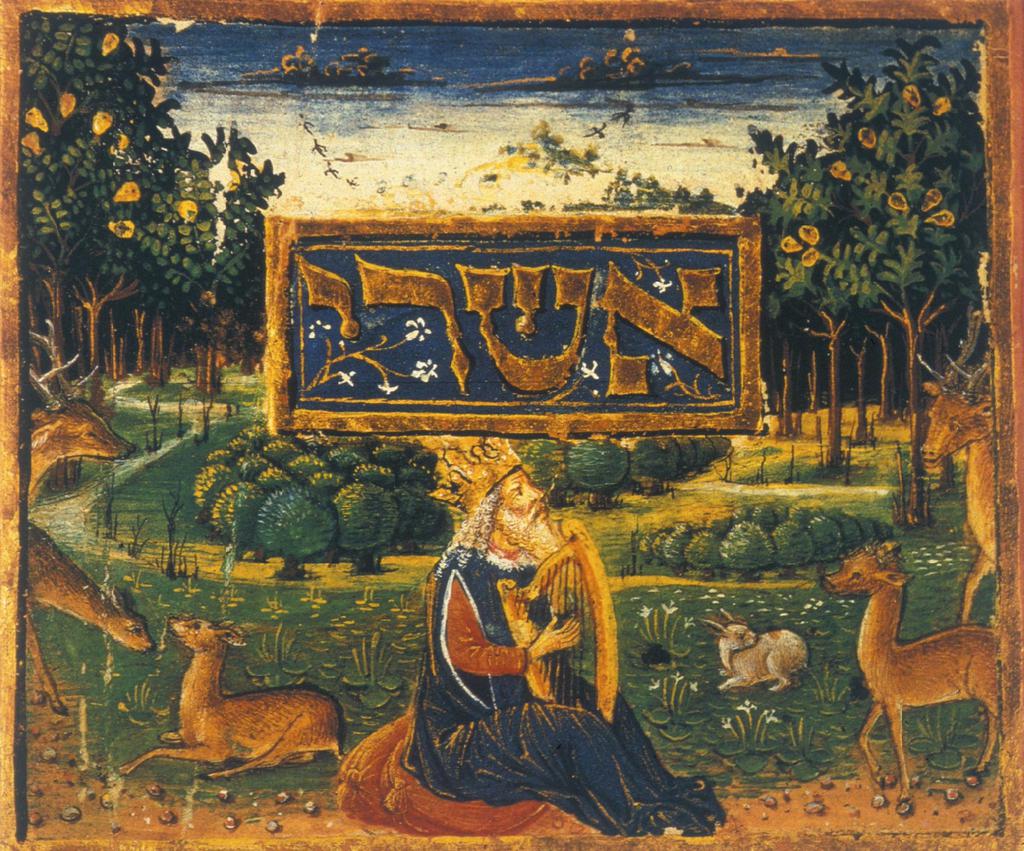
ASHREI – אשרי

In 1971 I studied in Yeshivas Torah Ore located in Kiryat Mattersdorf Yerushaliyim. On Shabbos the young boys of this  developing community, wasted away their time. Flash backs, of the inspirational Shabbos Pirchei groups I enjoyed as a young boy, growing up in Boro Park, encouraged me to create the same here. After some quick arrangements, Bnei Simcha was founded.

This new youth group, would hopefully keep the young boys of this community entertained and inspired Shabbos afternoons. Boys of all ages under Bar Mitzvah would get together, in the community Shul classrooms. I would tell them stories, teach them new songs, talk about the Parshe, launch contests, hand out prizes and nash bags.
These were not easy times for the parents and children living in Yerushaliyim. People were still recuperating from the Six Day War with new threats on the rise. The amenities that abound today in Eretz Yisroel did not exist then.
The Shabbos programs brought meaning and simcha into the children’s lives, while bringing their parents some relief. Bnei Simcha grew rapidly with three different groups running simultaneously.

A membership card was issued to each child, giving them a sense of belonging, which also helped support the effort. Parents were happy to pay a small membership fee which enabled the funding of prizes and nash for all groups. Yeshiva friends of mine soon joined the effort, donating some of their Shabbos off time, to help keep the children fullfilled. Eventually our success enabled Bnei Simcha to secure some funding from the Jerusalem Municipality, which further helped support our efforts.

There was this one challenged special needs boy Moshele, whom I will never forget.
It happened during one of the groups, when I was explaining the Tefilloh of Ashrei to the boys. All of a sudden Moshele screamed out, that he had his own explanation he wanted to share. You can just imagine the surprise his outburst caused, since he was somewhat compromised and never participated much.
The room fell silent and Moshele went on to explain his own understanding of the words אשרי יושבי ביתך עוד יהללוך סלה
ASHREI:
“Min darf gebben ah shrei”.
We need to give a scream.
YOSHVEI VEYSEHCOH:
“Farvos zits de in hoiz?
Why do you sit at home?
OID YEHALELUCHO SELO
“Mer darfen noch loibin
Der Aibershter”
We need to praise Hashem even more.
Now more than 50 years have passed. What he said that Shabbos still remains engraved in my memory. Will never forget the powerful message, sent down from above, through this special boy.
A scream must go out to the Jewish world, not to waste  precious time, sitting home, occupied with mundane things. Important to spend more time in the Beis Medrash, praising Hashem.
We never know what is going on in the minds of the special children in our midst. They undoubtedly are special holy נשמות. Their perspective on life may even be clearer then ours at times. When they speak up, they may be providing us with a special spiritual message that only they can share.

I MISSED OUT

Sometimes there are good things we do in life that seem to go unnoticed. Unfortunately we don’t receive any recognition for them. At times we may help someone out, with no thank you in return. As a student we may have put in our best effort, and it goes unnoticed  by the teacher. Students at times reveal why they are discouraged. “What’s the use, my effort isn’t appreciated or noticed”.

Recognition and appreciation
are key elements in advancing healthy mental and emotional growth in human beings. It is the tendency of people to reciprocate with appreciation when they are shown appreciation. It is true, we don’t only live our lives properly,  in order to receive honor or to be appreciated. However, there is no denying that the encouraging feeling one has from being appreciated, goes a long way. It is fuel that keeps people going and energizes them to continue on the right path and to do good deeds. When we train ourselves to express our appreciation for another persons efforts, by saying thank you, or acknowledging their contribution to society, it also trains us to be more grateful to Hashem and to also say thank you to Him.
There is a saying that no good deed goes unnoticed. If people don’t pay attention, Hashem surely does. Sometimes He lets you know directly and sometimes He lets you know indirectly. Whatever the case may be, saying a kind word or giving a compliment, encourages people and allows them to know, that they make a difference.
Spent a Shabbos in Tom’s River. After davening a middle aged man approached me out of the blue and asked, “Are you Rabbi Singer? Did you teach in Yeshiva Karlin Stolin, Brooklyn some 30 years ago? I missed out. You could have been my Rebbi. I remember you were the best Rebbi.”
Hard to imagine receiving such a compliment from an individual that was not even in my class. Yet he came over, just to express positive encouraging feelings. How special. It was nice to hear some thirty years later, that my presence in the Yeshiva made a difference. Not so sure if his compliment was totally true and what interaction we had back then, that prompted him to say what he said.
Everyone can agree however, that receiving a compliment is refreshing. Therefore it would  be wise for us to train ourselves to be complimentary whenever possible, so that others can feel the same way we felt, when we received one.
One of the greatest Mitzvos an individual can perform is to make another Jew, one of Hashem’s children, feel good. It doesn’t even, have to cost any money, nor does it require any strenuous action. Just one good word, to at least one person every single day, will surely go a long way.

Wagshal Appliance

As a youngster growing up in Borough Park in the sixties, I came to know R’ Wagschal, a truly devoted Chasidic Jew, steadfast in his adherence to Torah and Mitzvos. He would not compromise on anything, when it came to leading a religious life, no matter what the situation.

He had a small appliance store through which he supported his family. All types of people would come in to purchase, washers, dryers, refrigerators, air-conditioners, televisions, radios, tape recorders etc. If you asked him however to sell you a television, he would politely refuse and say, “what I consider improper to look at, I won’t sell to you”. Although televisions in those days were a hot sale item, it didn’t matter to him. He regularly forfeited potential daily profits, firmly believing that by doing Hashem’s will, his livelihood would not be diminished in any way. “What is meant for me to have, was already inscribed on Rosh Hashana. Not selling televisions will not affect me negatively”.

My mother of blessed memory, a Holocaust survivor, would always say, “it is one thing to say, I have trust in Hashem and it is an entirely different thing to actually live with trust in Hashem”. Living with trust  means fully relying on Hashem and having full confidence, that whatever is destined for me, I will receive. Knowing with certainty, that you will not be affected negatively by serving Hashem properly.
This Yid was practicing real live conscious Judaism and was ready to sacrifice for it. He would have no part in spreading bad influences. Looking for loopholes was out of the question. Just tried to do the right thing. He would not lend assistance to any matter that could possibly cause another Yid to become disconnected from Hashem.
On the contrary, he would visit Shuls and raise money to help Jews out whenever he could.
In short he was intoxicated with his Judaism. A real role model that didn’t just talk the talk, but walked the walk.

ITS BASHERT

Quaker Hill is one of the most renowned bungalow colonies in the Catskills, located in Monroe New York. Fortunate to have been one of the original sixty members, when it was founded in the early 1980s. Most of the families that spend their summers there, are offspring of Holocaust survivors. Over the years the colony developed into a unique, thriving, tight knit, family oriented, Torah  community. Everyone raising their children together, sharing in simchos and growing together spiritually. A beautiful Beis Medrash, stocked with many Seforim, weekend shuirim and lots of camaraderie. Many important initiatives serving Klal Yisroel, were originally launched from here. The colony has come to be known as a very hospitable, charitable place, dispensing Tzedakah to Klal Yisroel.

One can’t imagine the heartbreak and trauma that enveloped this colony one morning, when we awoke to tragic news. One of the mothers, lost control of her car, while driving back at night, leaving behind many orphans.
As Gabbi of the Kehilla at that time, I witnessed the heart wrenching cries, bewilderment and shock that gripped the entire colony. It was obvious, that something needed to be done quickly to ease the emotional pain and stop the confusion we were experiencing.
So I reached out to the Novominsker Rebbe, who was residing in Liberty, N.Y at the time. Hopefully he would be able to provide some guidance, comfort and healing. After explaining what happened, the Rebbe accepted the invitation to come and speak to the colony. An assembly was arranged for the following Sunday, at which the Rebbe and Rov spoke, bringing some consolation and understanding. After the speech I drove the Rebbe home to New York.
During the private time we spent together that day, traveling to and from the colony, I brought up the subject of Bashert and what it really means. I said to the Rebbe, “no matter what happens, the first thing said is, “its Bashert”. Rebbe, does it make sense, to blame Hashem for everything that goes wrong and say its Bashert, especially when it happened due to a persons own negligence? Hashem is an אב הרחמים, a merciful father.
If someone is reckless, takes unnecessary risks, lives on the edge, behaves abnormally, contrary to Hashem’s world and then gets hurt, is that also Bashert?
After discussing the subject back and forth, the Rebbe said. “The word Bashert is the most misused word in the Jewish dictionary”.
The Rebbe’s answer was shocking and left a deep impression on me and on all the people I have shared his answer with over the years.
How important it is for us to understand the words we say and not just apply them to all situations haphazardly.
The word Bashert is
appropriate only when one lives life properly, according to the precepts Hashem set up for the world to run by. If people do things that contradict the natural world order and get hurt in the process, that is not  Bashert. It’s plain foolishness on their part, and they are liable for the resulting consequences that follow. Expecting miracles at a time that contradicts Hashem’s natural order, is not the way a Torah observant Jew ought to think.
So it is important for us to live safely and properly and conduct our affairs according to the natural order in which Hashem set up His world. In other words, it is improper for one to blame Hashem for any mishap that takes place due to foolishness or negligence. It is true that ” ‘שומר פתאים ה “, Hashem guards fools. That does not mean however, that one should be a fool, or live like a fool and then depend on Hashem’s mercy. It may or may not come, depending on one’s merits.
We need to live properly and train our children to follow
our example.
With Hashem’s guidance and graciousness we will merit Hatzlocho, Brocho and stay protected throughout our lives.

Hold the Chumash

In 1961, as a young ten year
old boy, I would daven Shacris every morning in the shul of the Shtrosnitzer Rebbe. He was a Holy Yid, descendent of the Nudverna Dynasty, who miraculously survived the atrocities of the Holocaust.

In those days there were very few Jews living in Borough Park, especially on 17th Avenue and 51st Street, where I lived. The community for the most part consisted of Italian Americans with some modern American Jews and newcomers like my parents, survivors of the Holocaust. Was not easy for the Shul to gather a Minyin ⁶⁶ýevery morning, especially in this non Chasidic community.

I remember how the Holocaust survivors would talk about the trials and tribulations they suffered in the Nazi concentration camps as youngsters. What happened to them in the war years and how they were torn away from their murdered families. They would bemoan the difficulty of being  alone in a new country, without anything or anyone to rely on. The conversation was always about how they survived and escaped and the concern of how they would pull through in the future. They were all hard working men trying to make a living for their new growing families, despite the lack of education and language barrier. They would try to daven with a Minyin every morning before going to work. At times it was a challenge to put the weekday Minyin together. When there were only nine and the time for Borchu arrived, the Rebbe  would come over to me with a Chumush and hand it to me saying “Yankele, halt der Chimish shtark in de hent leiben der”. Hold the Chimish tight in your hands, next to you. Me with holding the Chimish tight created number ten. Even though I was under Bar Mitzvah they proceeded with the regular prayers.
How different it is today. We are fortunate to be able to daven with a Minyin almost any place and any time. What we take for granted today, was a struggle once upon a time. Let’s appreciate the times we live in and our ability to serve Hashem without hindrance or need for sacrifice. Timely Minyonim we have. The question is if we are timely. It would certainly be proper for us to be on time, even though we are not depended on.

TZITIS – WHAT A HOT DEAL

One of the simplest commandments to perform is the Mitzvah of Tzitis. Buy it, maintain it, wear it. You put it on in the morning and then you are on automatic pilot throughout the rest of the day  without having to do anything else. Imagine being able to earn while not working. That’s Tzitis, earning Mitzvos every second with very little effort. An insurance protection policy, offering unprecedented benefits to the individual wearing them. It’s a deal no
one can afford to pass up.

My Rosh Hayeshiva, HoRav HaGoan Chaim Pinchos Scheinberg Zt”l was known far and wide for his uncompromising performance of this Mitzvah. He wore many pairs and when asked why, he would joke and say, “I wear for for all those that don’t”.
How foolish on our part would it be to forfeit such a priceless opportunity.

As a student in the Yeshiva, I had the privilege of sitting right next to him. One day he gave a Halocha Shuir about the importance of wearing Tzitis. He also encouraged everyone at that time to try and wear a woolen garment, even in the hot summer months. When I asked what was wrong with wearing cotton, since its cooler, he simply responded that wool was the higher standard. Then he laughed pointing to the pile of woolen Tzitis he was wearing and remarked,
“better to be hot in this world and cold in the other world, then cold in this world and hot in the other world”.
He trained us by example, to try and perform all Mitzvos in the best way possible. He would say “when it comes to your personal endeavors do you settle for second best, then don’t settle for second best when it comes to performing Hashem’s Mitzvos. Live by a higher standard.

TAKING THE FIRST STEP

One day while visiting my elderly sofer Rav Kalmen Pinter, he suggested that I purchase Rabbainu Tam Teffilin. I respectfully told him that it was not my Minhog. He would not take no for an answer. Everytime I met him he would say, “Nu R’ Yaakov when will you purchase the Teffilin”. He would go on to explain the importance of wearing them, adding that it was high time for me to consider at my age doing something extra for a zechus.
The day finally came when I said to him, “I will purchase the Teffilin the day after my wife and I merit to walk our youngest child down to the Chupah. That would be the perfect time, upon entering a new chapter in life”.
He wasn’t satisfied with my answer. “Don’t procrastinate, you need to buy them now. If you take the first step now, Hashem will bless you to start wearing them shortly”.
Even though my daughter wasn’t a Kallah yet at the time, the Teffilin were ordered, with the hope and anticipation to soon merit the great day, when I would begin wearing them. I said to Hashem, “if it be your will for me to wear these new  Teffilin I have purchased, I am prepared to do so everyday for the rest of my life, starting the day following my daughters Chasunah”.
I paid for the Teffilin and put them away for safe keeping.
It didn’t take long and my daughter became a  kallah. Her wedding followed shortly thereafter.
True to my word, the next morning I took out the new Rabbainu Tam Teffilin and wore them for the first time, with a great expression of  Hakoras Hatov to Hashem.
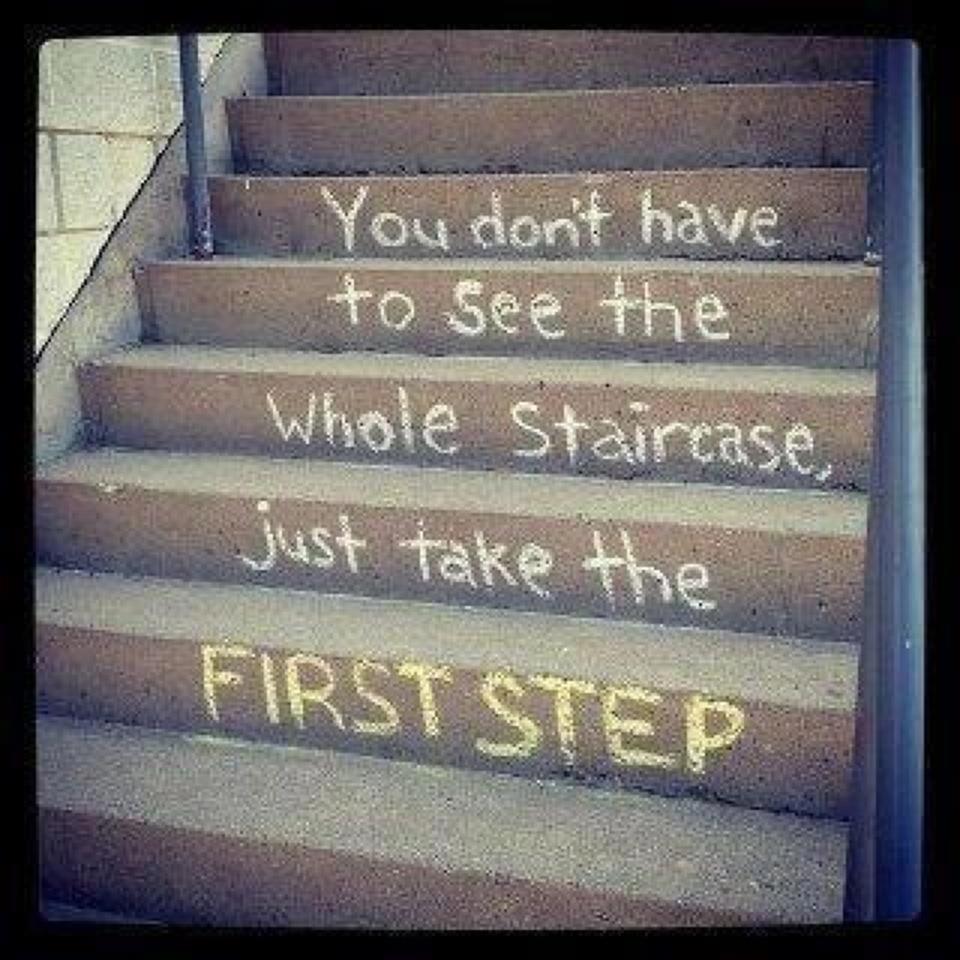
Taking the first step, trying to advance in our Avodas Hashem, is a way to merit the additional zechusim we need to help carry us through life. Whatever we may be involved in, it is always a good idea to take the first step.
When Hashem sees that we extend ourselves beyond the call of duty, we stand a better chance to merit His special
assistance from above. Instead of waiting for Hashem to act first, we need to act first. Then we can merit בדרך שאדם רוצה ללך, מוליכים אותו מין השמים
The guiding light of Hashem will see us through all challenges.

LAST WEEKS IN NYU

In 1988 my father was hospitalized in the NYU intensive care unit. A few months before he passed away I brought the Rosh Hayeshiva Horav Chaim Pinchus Scheinberg to visit him.
They were very close, going back to the Chofetz Chaim days of 1945. He even officiated at my parents wedding in 1949.
I felt it would be a chizuk for the entire family to meet the Rosh Hayeshiva and for him to give us guidance during this trying time. I remember bringing the Rosh Hayeshiva into the Intensive Care Unit, where my father lay comatose. Needless to say the Rosh Hayeshiva was emotionally moved by all that was happening to one of his favorite old talmidim. He called out to him, letting him know he was there. Standing  by his bed he started to Daven fervently, crying to Hashem for for a miracle. All of a sudden, miraculously my father partially awoke, opened his teary eyes and made it known that he was aware of the Rosh Hayeshivas presence.
After returning to the lobby my mother turned to the Rosh Hayeshiva and asked him, how long we were supposed to allow our father to suffer. At that time the Rosh Hayeshiva happened to be carrying with him the Sefer Titz Eliezer. He opened it to the section dealing with this particular question and showed us inside that we were  required to allow time to take its course and not interfere with Hashems ultimate plan. As hard as it was for us to digest this psak, we followed his sagely advice. My father continued to live for another few months until he was nifter totally purified Erev Shabbos Kodesh.
Surrendering to Hashem’s will in difficult situations as this,
is the real test. Living the understanding, that life is totally in Hashem’s hands, is the challenge. That He gives life and takes life back on His timetable is a reality we all must face. Cherishing every single moment, enables us to have a greater appreciation for the life Hashem grants us daily. We always must thank Hashem for our past life and daven for a future life that will allow us to serve Him in good health.

Nicklesburg Encounter

Woodburn, New York is home to the famous Nicklesburg Shul. In the summer months, day or night, it’s the sure place to find a Minyin, a smile and a free snack. When the small bungalow colony I reside in has no weekday morning Minyin, I daven in Nicklesburg. Try to be on time. When you have a scheduled meeting with the king, its not a good idea to be late. After all, it only takes a little better time management to be on time. Very easy to be judgmental when we see people walking in late. Doubt,

that is what Hashem wants of us. There is only one real judge in this world and that is Hashem. He has all the facts. We don’t. We only see outwardly, but never truly know the whole story. Therefore, we have no license to judge other people’s actions. Instead we are advised by our Sages to judge people favorably and to give them the benefit of the doubt. Not an easy perspective to live by. Its a life’s work. Admittedly it can be very challenging at times.
I was fortunate to learn this lesson, clearly, first hand. Thankful to Hashem that he allowed me the experience in real time.
So here I was one morning davening in Nikelsburg. The חזן was holding right before ברכו, when a young man whom I recognized, took a seat right in front of me. He hastily put on his Tallis and Tefillin and tried to catch up to the Minyin, fast track. Before davening was over, he was already unraveling his Tefillin and putting his Tallis away. He recognized me and perceived that I was amazed by his quick dialog with Hashem. Last in and first out? Somewhat ashamed he turned to me and said, I know my conduct  appears strange. Want you to know that my wife is sick in the hospital. I just managed to run away for a few minutes in order to catch a ברכו and קדושה, under very trying circumstances.
Wow, here was a Jew who strained himself to come to Shul that morning with absolute מסירת נפש. He could have taken the easy way out and daven by the כותל in his room. Instead he put forth tremendous effort to come to shul for as long as possible. Who was I to judge? How easy it would have been to misjudge. You never know the whole story. Even after you think you do, you probably don’t. How wonderful life would be for all of us, if we could only train ourselves not to be judgemental. To give other people the benefit of the doubt, as we would like those people to do for us.

A Rabbi & A Father

When the Prophet Eliyahu ascended to heaven in a fiery chariot, his student Elisha called out, “Father, Father, Chariot of Israel”.

The question is; Why didn’t Elisha call out, Rabbi, Rabbi?

The answer may be, that his Rabbi treated him more like a father then a student. To Elisha, the father portion of the relationship resonated more than the Rabbi portion of the relationship.

Not always does one have the privilege to find a Rabbi that he can also call father.
In the summer of 1971, I arrived in Eretz Yisroel for the first time, to study Torah under the guidance of the great Goan & Tzaddik HoRav Chaim Pinchos Scheinberg. In those days it was difficult for parents to send their children across the globe to study Torah.There were no cell phones, fax machines or email. Just making a regular phone call, was a challenge. It required operator assistance, dealing with different time zones and a hefty expense. A phone line connection had to be scheduled in advance and established between the two parties in two different parts of the world. It could take hours. Therefore communication was generally through letter writing. Consequently, the separation family felt then, was real. For my parents to send away their only son, was an extra special sacrifice. Only because the Rosh Hayeshiva guaranteed  them, that he would take care of me like his own son did they agree to send me off.
Arrived in Eretz Yisroel right before Tishe B’Av, in order to have ample time to prepare for the upcoming Elul Zman. For  young American boys, to acclimate to Eretz Yisroel living, in those days required real adjustment. It was a relatively new undeveloped country, still recuperating from three recent wars. Life was very different from that in the USA, let alone the language barrier, culture shock and change of environment.
The Yeshiva had just moved in to its new building, located
in the developing Kiryat Mattersdorf neighborhood in Yerushaliyim. Even before I had a chance to fully acclimate to the limited food, water quality, mountain air and straw mattress,Tishe B’Av had arrived. Needless to say, reciting Kinnus for the first time in Yerushaliyim was very inspiring. In the morning after davening, while exiting the main study hall, I fainted. The bochurim quickly carried me to my room two floors below, while someone ran to tell the Rosh Hayeshiva that I had suddenly taken ill. It didn’t take long before the Rosh Hayeshiva was sitting at my bedside, feeding me a teaspoon of whiskey with a biscuit less than a kezaiye’s every nine minutes. Till he was satisfied, I was recovering he stayed with me. He did not place the task on anyone else. The Rosh Hayeshiva cared for me like a father to a son, just as he promised my parents he would do. Not just then, but throughout the next 50 years, even after my parents passed on, the Rosh Hayeshiva was always concerned for me and my families welfare.
Years later when the Rosh Hayeshiva was already in his late nineties, he would stay in my home while visiting the USA, to raise funds for the yeshiva. I had the unique privilege of paying him back for the spoon feeding care he gave me when I was young, by spoon feeding him, now that he was to old to eat himself. He always gave of himself and likewise now, it was his chance to receive in return.
In Hashem’s world no good deed is overlooked. Hashem makes sure that what goes around, comes around,מדה כנגד מדה.

Bitul Ayin Horah

The Jewish people, time  immemorable, have always tried to avoid an Ayin Hora, the Evil Eye. Our Sages have advised, stay out of the public eye, as much as possible. Drawing attention to oneself is not recommended. The less people can talk about us, the better it is for us. Needless chatter and being in the limelight can cause “not fargining” and envy. That sets the stage for the evil eye to take hold. Our Sages have also warned us time and again, not to make other people the subject of our conversations. We may Chas V’sholom cause a friend, unwillingly, hardships and mishaps. Instead of being happy for someone who is successful, as we always should be, at times we may be resentful, jealous and even judgemental. Does he or she really deserve that kind of success? Why not me? What follows is Ayin Horah. Therefore it is wise, to avoid being the center of attention and topic of discussion. Best not to give people reason to mind our business and talk about our lives. Sometimes, its just unavoidable, out of our control and difficult to stop. Regrettably, that is what happened to my family many years ago.

Was renovating a house I had recently purchased for my growing family. For some reason, unbeknownst to me, it became the talk of the block, although nothing unusual was taking place. What followed was devastating. Shortly after  moving in everyone started to get sick. Throughout the first year, my wife, children and I wound up in the hospital, for no apparent reason. It made no sense. After consultation I was told that most likely we were effected by an Ayin Hora. Was very troubled by this revelation and phenomenon. Asked Rabbonim if they knew someone of Holy statuer that could eradicate an Ayin Hora. Unfortunately they could not point me in the right direction. At the time I was a Rebbe in Yeshivas Karlin Stolin. One day I went over to the renowned Rav Meyer Pilchick z”l and explained my dilemma. He looked concerned and said, I know just the right Jew who can help you. Needless to say, I was relieved to hear, that there was someone out there that could be of assistance. Asked him who that Rabbi may be. He said, his father, the humble Rav Nissim Pilchik z”l. He then went about arranging a time for me to meet with his father to remove the Ayin Horah. One morning I arrived at Rav Nissim’s home. He asked me to share with him everything I and my family had been going through. He then handed me a Special Sefer and told me to recite certain prayers in one room, while he would simultaneously recite some other prayers in a different room. After we completed our recitals, he told me, to go to the synagogue, to light candles at the Omid and to give charity. He assured me that my family would no longer suffer from the evil eye that had been hovering over us the past year.
So it came to pass, our lives returned to normal and continued uneventful.
Many years later, I merited to stumble upon his grave site in Tiberias by Divine Providence. What a privilege it was to offer up prayers at his gravesite and to have the merit of repaying him in some small way for his kindness.
What goes around, comes around. He had prayed for me and my family and now it was my turn to pray for him.

How careful we must be from chattering about other peoples lives and successes. Our Sages teach, that real blessing takes hold only on things that are hidden from the eye. By minding someone else’s business instead of our own, we can unconsciously cause a person and his family harm. When we don’t fargin and believe we deserve what the other person has been granted, we invite the Evil Eye. A Jew that trusts and believes in Hashem, that all resonates from Him, must always be happy with his or her lot. We must know that we can never have what is destined for someone else. Whatever Hashem blessed someone else with was meant for them. If it was meant for us, Hashem would have blessed us with it also. Hashem has enough to go around. We can never have what was not meant for us and we can never take away from someone else what was meant for them. When we know deep down that Hashem is the exclusive Giver and that there is no other power besides Him, our eyes, hopes and prayers will be focused heavenward, only looking up to our One and Only  beloved father.

The Torah Hitch

My father HoRav Pinchos Singer z”l was a very kindhearted, giving person, constantly doing Chesed  and always trying to foster peace and tranquility amongst people. He made it a point to always look for the good in everyone’s actions. No matter how challenging the situation was, he would somehow dig up a zechus. Nothing would make him more happier than to shower people with kindness, tell them a good vort and make them smile.

One morning as we were driving past 13th Ave and 48th Street in Boro Park, a Yid stopped us and asked for a hitch. We invited him into our car and asked him where he was going. He said 18th Avenue. That was one block out of our way, since we lived on 17th Avenue and 51st Street. Having to go to 18th Avenue would also mean getting tied up in traffic. As the car approached 17th Avenue, I  turned my blinker on, in preparation to make a right turn and to drop our passenger off on the corner. At that moment my father said, don’t turn. Go straight to 18th Ave and take the Yid to his final destination. He explained afterwards, that there are two types of Chesed. There is common Chesed which we regularly do and then there is Torah Chesed. Common Chesed is when you do someone a favor that does not inconvenience you. For instance, giving someone a hitch, when you are headed in the same direction they are. Not doing that kind of Chesed  would be sinful, since you are going there anyways. Torah Chesed takes on a whole new dimension. It is going out of your way to do someone a favor, even if it not convenient.  That shows you really care. It is not just about what you do, but more importantly, how you do it. It is not just about giving charity but how you give the charity. It is not just about helping someone but rather the demeanor in which you provide the help. How you smile while you are helping. It is going the extra mile that matters most. That was the precious lesson my father of blessed memory taught me that everlasting morning. Get out of your comfort zone and do the Chesed with all your hearth and soul.

It’s A Good Kashe

As a young boy I had the good fortune of living near to the great Goan  HoRav Eleizer Kersner zt”l, distinguished Rov of the Bnei Yehuda Shul in Boro Park. He was an acclaimed scholar and sage par excellence, from “The Alter Heim”, who basically knew everything there was to know. He strictly lived by the principles and etiquette of the old country. As a warm, concerned, caring person he befriended me, a youngster growing up on the streets of Brooklyn in the early sixties. Since my father and I davened in his shul Shabbos night, the Rov took an interest in my progress and developed a close relationship with me.
One day I came home from yeshiva with a question that perturbed me. Naturally I went to the Rov’s home to share my dilemma with him. He thought for a moment and said “Yankele, doz iz a gutte kashe” this is a good question. Needless to say I was pleased to hear that. “Ein minutkele, ein minutkele” one minute, just one minute the elderly Rov said, as he took a moment to think of an answer. He then took a ladder, braced it against one of the bookcases lining his dining room walls, climbed up, stretched his hand out high and pulled out an old sefer from the very top shelf. He climbed back down, blew off the dust, placed the sefer on the table, flipped some pages and then called me over pointing to a specific spot on the page and said smilelingly, “here Yankele is the answer to your question”. Can you imagine! There must have been hundreds of seforim in his library and he knew exactly, which sefer dealth with the question, where the sefer was located amongst all the other seforim, what page to turn to and the exact spot on the page where the answer was discussed. Unbelievable. As a youngster it was difficult to fully appreciate the giant in who’s company I merited to be. Looking back now, I am humbled to have had the great opportunity of being exposed to one of the great Goanim of yesteryear. Wish I would have taken a little more advantage of the relationship. We should never underestimate the greatness of those who teach us Torah. Their wisdom and knowledge only came through great toil and effort. One day we will look back in time and say to ourselves how lucky we were to have known that great Rosh Hayeshiva. Let us make sure today that we won’t have to say tomorrow “If only I would have taken more advantage of the relationship I had in hand. Take advantage today. Cherish the moment.

Ready To Be Shamed For Torah

Will never forget my beloved Rebbe, HaGoan HaTazdik HoRav Chaim Pinchos Scheinberg zt”l. He excelled in all areas. The true embodiment of Torah and a living life example to all. What stood out most, was his love for Torah and those who studied it. He would sacrifice his health and total being to no end in his efforts to insure its continuity. His honor meant nothing when it came to preserving the Torah’s honor.
He lived in Yerushaliyim and had the custom of coming to the United States every Pesach, to spend time with his family and raise money for his Yeshiva. On Chol Hamoed the Rosh Hayeshiva would dedicate one full morning to make appeals at all minyonim taking place in the renowned Sefardeshe Shul in Boro Park. Between the many minyomin going on all morning, he would sit in a small room off to the side and learn, till he was called upon. Wasting time didn’t exist by him. Every moment was precious. By the time all minyonim ended at approximately midday, the Rosh Hayeshiva was totally exhausted, having davened himself at sunrise. It was my honor to drive him afterwards to Monsey. It always bothered me, how such an elderly acclaimed Godol demeaned his stature yearly in such a way. Since we were close, I mustered the confidence and asked, Rebbe, how much did you raise this morning. Surprisingly he answered $1000.00. Rebbe, if I raise the money for you, would you please stop doing it yourself? Its disrespectful to you and the yeshiva. No he said. A Yid has to be willing to be Moser Nefesh and shame himself for the sake and honor of Torah. His answer no doubt shocked me. Wow. The Rosh Hayeshiva continued to do just that for many years thereafter. His love for Torah and his yeshiva was boundless. He honored them by exerting himself on their behalf.

The Telzer Rosh Hayeshivas Shas

It was 1964 when my parents z”l sent  me away from Brooklyn, to study Torah in Telz Yeshiva. Needless to say it was a tremendous sacrifice for them to send away their only 13 year old son, after having survived the Holocust and losing most of their families. They however weren’t ready to take any chances of having their son grow up amongst the gentile population that lived in Boro Park at the time. It was their prayer and hope that up on the secluded hill where the yeshiva was located in Wickliffe, Ohio, surrounded by great Roshei Yeshiva and Torah scholars, their son would develop into a Torah true Jew. All my teenage years were luckily spent in that environment. After graduating high school my father unfortunatley got very sick. I needed to find a way to support myself while in yeshiva. Fortunately an opportunity  presented itself where I was able to secure the monopoly of all binding rights in the yeshiva. Every Thursday evening, anyone who needed their seforim bound would bring them to a designated room in the dormitory. Depending on the condition of the sefer, a repair charge would be  established.

One evening the Rosh Hayeshiva Horav Mordechi Gifter showed up and asked if I could repair his Shas. He had the old golden Shas with the padded cover. It was in shambles and looked very used. I told the Rosh Hayeshiva, it would be my pleasure to try and repair it, but that it would be a big job due to the condition it was in and would take some time. He graciously consented to the terms and price. After weeks of hard work it was finally restored. Was witness to how much hard work must have probably gone into ruining the Shas. The untold thousands of  hours the Rosh Hayeshiva must have spent toiling and trying to understand every word and nuance contained in each page. The sleepless nights he must have spent preparing his magnificent  shiurim.

Will never forget, how happy he was when I returned the Shas to him. He looked it over and then said to me with a big smile, “Yankel, du host mir geratevit mein shas” Yankel, you saved my Shas. He was so overjoyed that all the pages of his precious Shas came together again.

The joy experienced and merit felt at having brought the Rosh Hayesiva this happinnes by restoring his precious Shas will remain with me forever.

Meeting the Tzadik Rav Zundel Kroizer ztl

In  2007 my wife and I traveled to Yerushaliyim to spend Succos with our youngest newlywed couple. During our visit we decided to meet with the Tzadik Horav Zundel Kroizer, at his very humble dwelling in Botei Brode, to receive his brocho. It was a very spiritually uplifting experience. Just to be in his presence was a moment to cherish. While there it became apparent that he was surviving on the very bare minimum. Before departing I offered him some money. He refused to take it. “I only accept money to hand out to the  poor” he said. Basically what he needed for his own livelihood didn’t count. What was given to him, he gave to other poor people, so they  could live. In his eyes he was not important at all and certainly not needy.

As we were leaving I noticed piles of new seforim in a book case off to the side and asked Rav Zundel if he authored them. “Yes” was his reply. “Can I purchase a sefer”? “Yes”. Short answers. No extra words. “How much does this sefer cost?” “Thirty five shekels”. I pulled out  a $50 bill, worth 250 shekels at the time and gave it to him. My hope was that through the purchase he would wind up keeping some money for himself. I was in for a big surprise. He refused to take it and said, “it is forbidden for me to accept more money then the actual selling price value of the sefer. However if I say to him, “לדידי שוה לי” to me the purchase price is worth it, then he would  accept it. I complied with his wishes and he accepted the money. Fearing that he would give it away, I said to him, “the Rebbe also needs to live”. What he answered now was truly shocking. “קמך יש לי, תורה אין לי”. Flour I have, Torah I don’t have”. He lacks for nothing and needs nothing. The only thing he thirst for is additional Torah knowledge. Mind you he was clear and fluent in all the revealed and hidden areas of Torah. Due to his extreme humbleness, he didn’t consider himself knowledgeable or worthy of anything more then what was absolutely required for his daily existence.

How fortunate we were to have the merit to stand in the presence of such greatness, a true Eved Hashem, permeated through and through with holiness, piety and purity.יהי זכרו ברוך.

Zeidy Marries Third Time

Will never forget when my grandfather HoRav Alter Yitzchok Izik Friedman zt”l married for the third time. The year was 1978. He already was 80 years old at the time. You can well imagine how reluctant everyone in the family was, about him  remarrying again. He however insisted and married Gittele in the presence of the Skulener Rebbe. Remember the Rebbe being delayed to the chasunah. The Kallah an old lady herself, refusing to go to the Chupah until the Rebbe arrived and was able to be Mesader Kedushin. It was a pretty interesting wedding to say the least. Watching Choson and Kallah sitting next to each other and the grandchildren dancing in front of them. It was a sight to behold.

Since I was very close with my grandfather, I asked him  when the opportunity presented itself, why he decided to marry a third time.“It’s strange Zeidy, but older people like you generally don’t get married a third time, especially at such an advanced age. Why did you?” What he answered, left an everlasting impression. His words and the lesson he  taught me then, still rings loud in my ears. “Az meleibt ahlein vert min selfish”. If you live alone you become selfish.

Life’s main purpose is to share and to give. My Zeidy remarried again just to make sure that he would not become selfish in his old age. He needed to live with someone in order to ensure that he would have with whom to share and to whom to give. What a holy marriage that was.

Unexpected Wedding Invitation

One day a wedding invitation arrived at my home, sent by Rabbi Avrohom Bleich, a Rov in Michigan. He was an old beloved talmid of mine, whom I hadn’t seen for some 35 years. He was marrying off a child in Brooklyn, and invited me to the wedding. Not so easy to respond yes to every wedding invitation that arrives and to attend. After all, traveling from Lakewood to Brooklyn, round trip is time consuming. Two weeks passed and then one day I received a phone call. It was non other then Rabbi Bleich himself, personally reaching out and inviting me. He said it would mean very much to him to see me attend. That I had touched his life in many positive ways and that he had fond memories.Thought to myself, if a Talmid went through all the effort to uncover his old Rebbie’s whereabouts, he deserved my attendance. Little did I know at the start of the trip, how rewarding and special the evening would turn out be. Upon entering the wedding hall, he noticed my arrival and immediately took me into the center to dance with him alone. A while later the choson joined the circle followed by the mechutin. Took one look at him and realized he was also a talmid. Two talmidim were meshadich together. Soon after another few men suddenly joined our dance circle and realized they were also talmidim, all from the same class. How special that was, to be dancing together with a half dozen talmidim, after being separated 35 years.

How did this all come together? A talmid went the extra mile. A Rebbie went the extra mile. Surely Hashem looked down upon us and admired the love he saw between a talmid and his Rebbie and rewarded the effort with a mini reunion. Touch a persons hearth and inspire him. The love you create will last a lifetime.

Blessing of Rav Nosson Tzvi

In the year 2009 my wife and I traveled to Eretz Yisroel to spend Succos with our children. They were  married a few years and still childless. Needless to say these were trying times for our entire family. Everyone was davening, giving tzedakah and begging Hashem for a yeshuah.
During Chol Hamoed we all went to visit Rav Nosson Tzvi and his Rebbetzin. We all sat down in his Succo and spoke for a while. In the course of our conversation, I took the opportunity to share with him a spiritual kavona that came to me one day, as I was davening for my children in Shimonei Esrey. The Rosh Hayeshiva listened intently and said with much feeling and emotion, “Mit ah zeliche kavonos darf der eibershter mekabel zein de tefelois”. With such thoughts Hashem MUST accept the prayers. He reassured us that Hashem would help. And so it was, a year later, the following Succos my wife and I once again traveled to Eretz Yisroel to celebrate the birth of a grand daughter. You can just imagine the simcha of the Rosh Hayeshiva and Rebbetzin, of the new parents and grandparents. There are no words to express how grateful we all were for Hashem’s gift and unending kindness.
We can never make light of the brocho of an Odom Godol or the prayer of a simple man. Hashem is ALWAYS listening to our hearts. If we are sincere enough, He may bless us with the gift we have been waiting for. Have faith and never stop praying truthfully.

Impressions We Leave

The impressions we leave unconsciously, may be take away lessons to an observer of an event. They may influence the viewer for a lifetime and we may never know it.

In the late sixties my parents drove from Brooklyn, New York  to Telz Yeshiva in Wickliffe, Ohio to see me. My roomate witnessed their special love and caring interaction  throughout their visit.

After Beis Medrish we both moved on in life, lost contact, got married, raised families and had grandchildren. Then one day, fifty years later my roomate happened to meet me by chance at a wedding. We reminisced, and then during our conversation he reminded me of the impression my parents had left upon him fifty years earlier .

He told me “I don’t know if you realize, but your parents were very devoted to you. You were very special in their eyes.
Did you ever hear of the organization, Priority One? That’s what you were to them”. His words touched my heart deeply.
I couldn’t believe what my ears were hearing.
It’s to marvel how their short visit had such an influence on a young teenage boy, who was just observing from afar a parents interaction with their son. My old friend still remembered them now, although a span of fifty years had passed. They stood out in his mind and left an everlasting impression on him that he never forgot, although he had been through tens of thousands of experiences since then. Wow.
This is the kind of impression we can leave on people young and old through our exalted actions and words, that can last a lifetime.
Was thinking, how careful we must be in all our interactions with people. You never know who’s watching or listening. The impressions we leave may impact a life forever.